
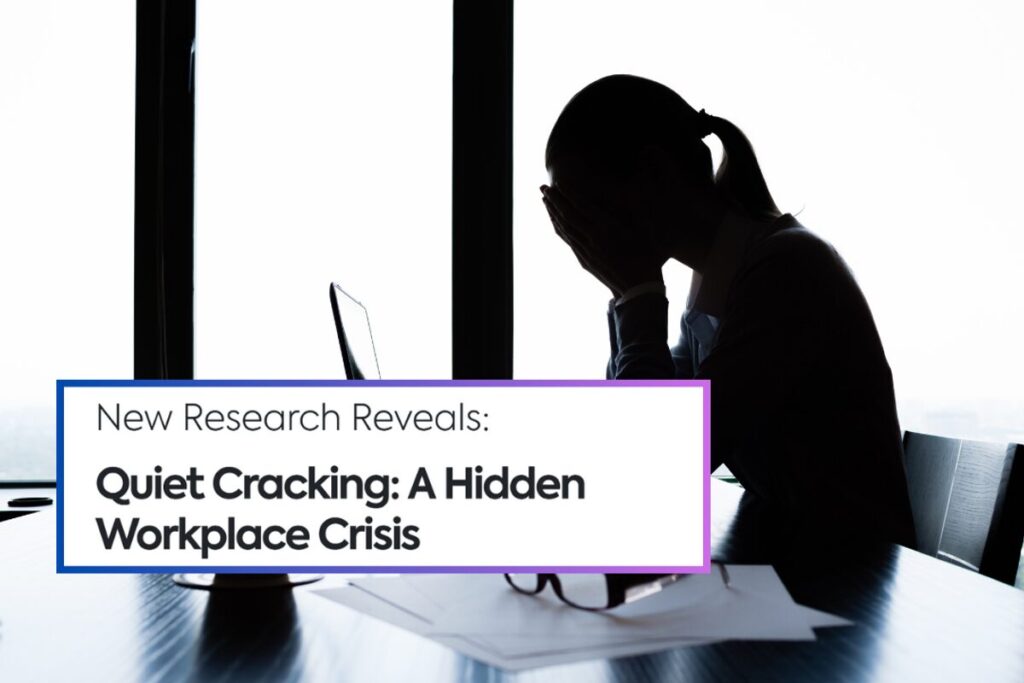
This is a story that millions of employees can relate to.
You’re cracking — feeling tired, depressed, and frustrated due to a lack of growth or opportunity.
| Every day, you wake up, go to your job, and complete your assigned tasks to the best of your ability. But have you been “quiet cracking” this whole time?
It’s entirely possible. What is ‘quiet cracking’? “Quiet cracking” is the latest buzzword to describe a lack of fulfillment at work — often as it pertains to job satisfaction, workloads or the potential for growth, among other factors. And unlike “quiet quitting,” it might not necessarily manifest in an employee’s performance — just their happiness. “I mostly see it in my students who are graduating college, and starting their careers with a lot of energy and enthusiasm,” said Wayne Hochwarter, a senior professor at Florida State University’s College of Business. “Then, three or five years in … they begin to ask, ‘Am I really enjoying this? Do I think this is the path to get me where I want to get?’” ‘Pervasive at all levels’ It’s not just younger members of the workforce who feel disengaged, either. A recent survey from TalentLMS, a company that offers training resources for businesses, found that over half of the respondents experienced “quiet cracking” at their jobs, with about 20% saying they experience it “constantly.” A 2025 report from Gallup included nearly identical findings, indicating that 52% of employees in North America were “not engaged” in their jobs, and 17% were “actively disengaged.” The same report indicated that disruptions caused by the pandemic — rather than the expectations of any one age group — were a major factor. This is a story that millions of employees can relate to. You’re cracking — feeling tired, depressed, and frustrated due to a lack of growth or opportunity. |
