
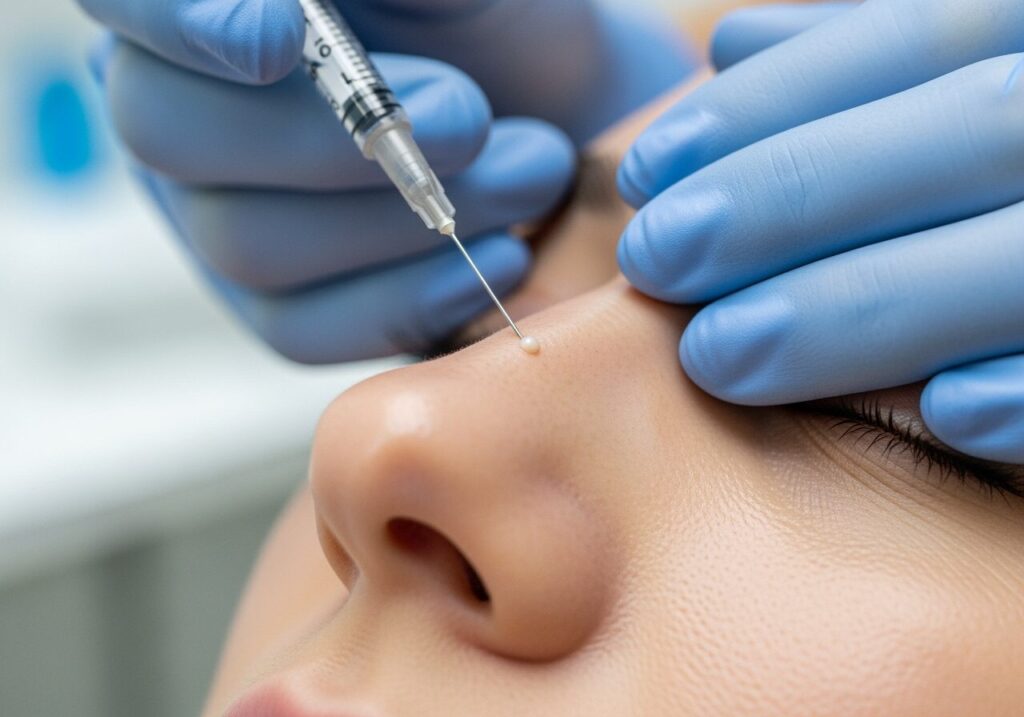
An Introduction to the “Liquid Nose Job”
Many of us dream of a more balanced nose. But the thought of surgery can be daunting. What if we told you there’s a way to refine your nose without going under the knife? A non-surgical nose job, often called a “liquid rhinoplasty,” has become a popular alternative.
This innovative procedure uses injectable fillers to reshape the nose. It’s a minimally invasive option for those seeking cosmetic changes without the downtime or permanence of traditional surgery. Social media has also played a big role in its growing popularity.
In this extensive guide, we will explore everything you need to know about this treatment. We’ll cover what it is, how it differs from traditional surgery, and who is a good candidate. We’ll also discuss the techniques, materials, and important safety considerations. Our goal is to provide you with clear, unbiased information so you can make an informed decision about your profile.
A non-surgical nose job, or nonsurgical rhinoplasty, is a cosmetic procedure that uses injectable dermal fillers to temporarily alter the shape of the nose. Unlike traditional surgical rhinoplasty, which involves incisions, bone reshaping, and cartilage manipulation, the liquid nose job is a minimally invasive procedure performed in an outpatient setting. It offers a quick and relatively painless way to address minor nasal imperfections and improve overall facial harmony.
The core principle behind this technique is to strategically add volume to certain areas of the nose to create the illusion of a straighter, more refined, or more symmetrical appearance. This might seem counterintuitive if you’re aiming for a smaller nose, but by adding volume above and below a dorsal hump, for example, we can create a smooth, straight profile without removing any tissue. Similarly, adding a small amount of filler to the nasal tip can lift it, making the nose appear more proportionate.

This approach is particularly appealing to individuals who are hesitant about surgery, desire temporary results, or wish to “test drive” a new nasal appearance before committing to a permanent change. It’s a testament to how far aesthetic medicine has come, offering sophisticated solutions with minimal disruption to daily life.
What a Non-Surgical Nose Job Can and Can’t Achieve
Understanding the capabilities and limitations of a non-surgical nose job is crucial for setting realistic expectations. While it can work wonders for certain cosmetic concerns, it is not a substitute for surgical rhinoplasty in all cases.
Who is a good candidate for this procedure?
A good candidate for a non-surgical nose job is typically someone with minor cosmetic concerns and realistic expectations about the outcome. This procedure is ideal for individuals who:
- Have a dorsal hump: By placing filler above and below the hump, we can create a smoother, straighter nasal bridge, effectively camouflaging the bump.
- Desire tip refinement: A small amount of filler can be used to lift a droopy nasal tip or add definition, improving projection and overall balance.
- Seek to correct minor asymmetries: Fillers can subtly balance out minor crookedness or irregularities in the nasal contours, creating a more symmetrical appearance.
- Have a flat nasal bridge: For some ethnic noses, adding volume to the bridge can create a more prominent and defined profile.
- Wish to correct post-surgical irregularities: Non-surgical rhinoplasty can address minor depressions or remaining asymmetries after a previous surgical nose job.
- Are looking for a temporary change: Since the results are not permanent, it’s an excellent option for those who want to experiment with their nasal appearance or avoid the permanence of surgery.
- Prefer a minimally invasive approach: Patients who want to avoid general anesthesia, incisions, and significant downtime find this option highly appealing.
According to StatPearls, appropriate candidates for nonsurgical rhinoplasty include patients with mild cosmetic nasal deficits (humps, contour irregularities, tip issues) who wish to avoid surgery’s cost, downtime, and risks.
What are the limitations of a non-surgical nose job?
Despite its many advantages, a non-surgical nose job has distinct limitations that differentiate it from traditional surgical rhinoplasty:
- Cannot reduce nose size: This is perhaps the most significant limitation. Dermal fillers add volume, so they cannot make a large nose smaller or a wide nose narrower. While it can create the illusion of a smaller or more refined nose by improving proportions, it does not physically remove tissue.
- Cannot fix breathing issues: Functional problems such as a deviated septum or other internal structural issues that impair breathing cannot be corrected with fillers. These require surgical intervention.
- Not a permanent solution: The results are temporary, typically lasting between 6 months to 2 years, depending on the type of filler used and individual metabolism. This means touch-up treatments are necessary to maintain the desired look.
- Limited for severe deformities: While effective for minor to moderate concerns, significant structural deformities or very prominent humps may not be adequately addressed with fillers alone.
- Cannot change bone or cartilage structure: Fillers can only add volume and reshape soft tissues; they cannot alter the underlying bone or cartilage framework of the nose as surgery can.
If your primary goal is to make your nose smaller, correct significant structural issues, or improve breathing, surgical rhinoplasty remains the gold standard. Non-surgical options are best for subtle improvements and camouflaging imperfections.
Here’s a comparison to help illustrate the differences:
Feature Non-Surgical Rhinoplasty (Liquid Nose Job) Traditional (Surgical) Rhinoplasty Method Injectable dermal fillers Incisions, bone/cartilage reshaping Anesthesia Topical numbing cream, local anesthetic General anesthesia Procedure Time 15-30 minutes 1-3 hours Downtime Minimal to none (0-2 days) 1-2 weeks for initial recovery, months for final swelling to subside Results Temporary (6 months – 2 years) Permanent Cost Lower upfront cost (average $1,287) Higher upfront cost (average $11,064) Reversibility Yes (with HA fillers) No Nose Size Cannot make nose smaller, can create illusion of refinement Can make nose smaller or larger Breathing Issues Cannot correct Can correct Ideal For Minor aesthetic tweaks, camouflaging humps, tip lift, temporary change, “test drive” Significant reshaping, size reduction, functional correction, permanent results The Procedure: From Consultation to Final Look
The non-surgical nose job procedure is relatively straightforward and quick, making it a popular “lunchtime” treatment.
Consultation Process
Every successful aesthetic journey begins with a thorough consultation. During this initial meeting, your provider will:
- Discuss your aesthetic goals: What do you like and dislike about your nose? What changes are you hoping to achieve?
- Conduct a facial assessment: The nose is part of the entire facial aesthetic. A skilled practitioner will evaluate your overall facial symmetry and proportions to ensure the changes to your nose complement your other features.
- Review your medical history: This includes any allergies, previous cosmetic procedures, current medications (especially blood thinners), and underlying health conditions.
- Explain the procedure in detail: You’ll learn about the specific techniques, the type of fillers that will be used, potential risks, and expected outcomes.
- Set realistic expectations: Your provider will clearly outline what a non-surgical nose job can and cannot achieve for your specific concerns.
What should patients expect during the procedure?
The procedure itself is typically quick and involves minimal discomfort:
- Anesthesia: A topical numbing cream is applied to the nose and surrounding areas to minimize any pain. Many dermal fillers also contain lidocaine, a local anesthetic, which further improves comfort during injection.
- Marking: Your provider may mark specific injection points on your nose to guide the placement of the filler.
- Injection: Using very fine needles or cannulas, the dermal filler is precisely injected into strategic areas of the nose. The injector will often mold the filler immediately after injection to achieve the desired shape. This process is very delicate and requires a deep understanding of nasal anatomy and facial aesthetics.
- Duration: Non-surgical rhinoplasty procedures can be completed in as little as 15 to 30 minutes, making it a convenient option for busy individuals.
- Pain Level: Most patients report minimal discomfort during the procedure, often describing it as a slight pressure or stinging sensation, thanks to the topical anesthetic and lidocaine in the filler.

What materials are used in a non-surgical nose job?
The choice of material is critical for safety, efficacy, and reversibility.
- Hyaluronic Acid (HA) Fillers: These are by far the most common and preferred type of filler for non-surgical rhinoplasty. HA is a naturally occurring substance in the body that attracts and holds water, providing volume and hydration. Examples include Juvéderm® (like Voluma) and Restylane®. Approximately 80% of practitioners prefer hyaluronic acid fillers for non-surgical rhinoplasty due to their reversibility and safety profile.
- Reversibility: A significant advantage of HA fillers is that they can be dissolved with an enzyme called hyaluronidase if the patient is unhappy with the results or if a complication arises. This provides an important safety net.
- Calcium Hydroxylapatite (CaHa) Fillers: (e.g., Radiesse®) This is another type of temporary filler that provides immediate volume and stimulates natural collagen production. CaHa fillers tend to be firmer and can last longer than HA fillers (up to 12-18 months or more). However, they are not reversible with an enzyme, making precise placement even more critical.
- PDO Thread Lifts: While not a “filler” in the traditional sense, PDO (polydioxanone) threads can also be used for non-surgical nose reshaping. These dissolvable threads are inserted under the skin to lift and support the nasal structure, particularly the bridge and tip. They also stimulate collagen production, offering some long-term benefits. Thread lifts offer a middle ground in terms of longevity between fillers and surgery.
- Permanent Filler Options: Some clinics may offer permanent fillers like silicone (e.g., Silikon-1000® microdroplets). While these offer lasting results, their use in the nose is highly controversial due to the irreversible nature and higher risk of complications such as granulomas, infection, and disfigurement, which are much harder to correct. Most reputable practitioners strongly advise against permanent fillers in the nose due to the complex anatomy and potential for serious, irreversible side effects.
What is recovery and aftercare like?
One of the most appealing aspects of a non-surgical nose job is the minimal recovery time.
- Downtime: Most patients experience little to no downtime and can return to their normal activities immediately after the procedure.
- Common Side Effects: You might experience mild and temporary side effects such as:
- Bruising: Small bruises at the injection sites are common but typically resolve within a few days.
- Swelling: Mild swelling may occur but usually subsides within 24-48 hours.
- Redness: The injected areas might appear slightly red immediately after the procedure.
- Tenderness: The nose may feel a bit tender to the touch for a day or two.
- Aftercare Instructions: Your provider will give you specific aftercare guidelines, which typically include:
- Avoiding touching or massaging the nose excessively for the first 24-48 hours.
- Avoiding strenuous exercise for 24-48 hours to minimize swelling and bruising.
- Avoiding wearing heavy glasses that rest on the bridge of the nose for a few days.
- Applying a cold compress to reduce swelling and bruising.
- Avoiding alcohol and blood-thinning medications (like ibuprofen, aspirin) before and immediately after the procedure to minimize bruising.
Following these instructions diligently will help ensure optimal results and minimize potential side effects.
Safety, Cost, and Finding the Right Expert for Your Non-Surgical Nose Job
While non-surgical rhinoplasty is generally considered safe when performed by a qualified professional, it’s not without risks. Understanding these, along with cost considerations and how to choose your provider, is paramount.
What are the risks and potential complications of non-surgical rhinoplasty?
The nose is a complex area with a rich blood supply, making injections here particularly high-risk if not performed by an expert. While rare, serious complications can occur:
- Vascular Occlusion: This is the most serious risk. It happens when filler is accidentally injected into a blood vessel, blocking blood flow. This can lead to tissue death (necrosis) in the affected area, or, in extremely rare cases, blindness if the filler travels to the ophthalmic artery. Symptoms include severe pain, blanching (whitening) of the skin, and a mottled appearance. Prompt treatment with hyaluronidase is crucial to dissolve the filler and restore blood flow. Complications such as vascular occlusion, which can lead to skin necrosis or blindness, are rare but serious risks associated with non-surgical rhinoplasty.
- Infection: As with any injection, there’s a risk of infection at the injection site.
- Allergic Reaction: Though rare, some individuals may have an allergic reaction to the filler material.
- Nodules or Granulomas: Lumps or bumps can form under the skin, sometimes requiring treatment or removal.
- Filler Migration: In rare cases, the filler can move from the injection site to another area.
- Tyndall Effect: A bluish discoloration of the skin that can occur if the filler is injected too superficially.
Most common side effects are temporary and mild, such as temporary discomfort, bruising, and swelling. However, awareness of the rare but serious risks underscores the importance of provider selection.
How much does a non-surgical nose job cost compared to surgical rhinoplasty?
Cost is often a significant factor in deciding between non-surgical and surgical options. Non-surgical rhinoplasty is considerably more affordable upfront.
- Non-Surgical Rhinoplasty Cost: The average cost of a non-surgical (liquid) rhinoplasty is $1,287, with a general range between $495 and $2,850. This cost can vary based on the type and amount of filler used, the provider’s experience, and geographic location. While the upfront cost is lower, these are temporary results, so maintenance treatments will incur recurring costs.
- Surgical Rhinoplasty Cost: The average cost of surgical rhinoplasty is around $11,064, with a range from $4,125 to $22,000. This higher price reflects the complexity of the surgical procedure, anesthesia fees, facility costs, and the permanent nature of the results.
While surgical rhinoplasty is a one-time expense (excluding potential revisions), the cumulative cost of repeated non-surgical treatments over many years could eventually approach that of surgery. However, the lower initial investment and flexibility make non-surgical options attractive.
How should patients choose a qualified provider for a non-surgical nose job?
Choosing the right practitioner is the most critical step for both safety and achieving desirable results. Given the delicate and high-risk nature of nasal injections, expertise is non-negotiable.

We strongly recommend choosing a board-certified plastic surgeon or a board-certified dermatologist who has extensive experience with facial anatomy and injectable fillers, specifically in the nose. Here’s why:
- Anatomical Expertise: The nose has a complex vascular network. A board-certified surgeon or dermatologist has a deep understanding of this anatomy, significantly reducing the risk of serious complications like vascular occlusion. With any procedure, both surgical and nonsurgical, always make certain to opt for a board-certified plastic surgeon who is a member of ASPS to ensure that you are safely achieving your desired results.
- Experience with Fillers: Look for a provider who performs non-surgical rhinoplasty regularly and can show you before-and-after photos of their work.
- Emergency Preparedness: A qualified provider will have hyaluronidase readily available to address vascular occlusion immediately if it occurs. They should also have a clear protocol for managing complications.
- Aesthetic Eye: Beyond safety, an experienced injector possesses an artistic eye to ensure the results are balanced, natural, and harmonious with your overall facial features.
- Reputation and Reviews: Check patient reviews and testimonials. A reputable clinic will prioritize patient safety and satisfaction.
For a more comprehensive look at this procedure, we invite you to read a comprehensive non surgical nose job guide. This resource provides further insights into selecting a skilled professional and understanding the nuances of non-surgical nose reshaping. When considering any cosmetic procedure, always prioritize safety and expertise over cost.
Frequently Asked Questions
We often encounter common questions and misconceptions about non-surgical nose jobs. Let’s address some of them directly.
Does a non-surgical nose job hurt?
The level of pain experienced during a non-surgical nose job is generally minimal. Here’s why:
- Topical Numbing Cream: Before the injections begin, a strong topical anesthetic cream is applied to the nose and surrounding areas. This numbs the skin’s surface, significantly reducing sensation.
- Lidocaine in Fillers: Many modern dermal fillers, especially hyaluronic acid-based ones, are formulated with lidocaine, a local anesthetic. This means that as the filler is injected, the area continues to be numbed from within.
- Fine Needles/Cannulas: Practitioners use very fine needles or blunt-tipped cannulas, which are designed to minimize discomfort during insertion.
- Patient Experience: Most patients describe the sensation as a slight pressure or a mild stinging, rather than sharp pain. Discomfort is typically brief and well-tolerated. Some clinics may also offer ice application during the procedure to further numb the area.
Overall, while you might feel something, it is usually not considered painful, and the discomfort is fleeting.
How long do the results last and are they reversible?
The duration of results for a non-surgical nose job varies depending on several factors:
- Type of Filler:Hyaluronic Acid (HA) fillers: Results typically last between 6 months to 2 years. The exact duration depends on the specific HA product used (some are designed to be more robust and last longer) and how quickly your body metabolizes the filler.
- Calcium Hydroxylapatite (CaHa) fillers: These can last 12-18 months or even longer.
- Individual Metabolism: Everyone’s body metabolizes fillers at a different rate. Some individuals may break down the product faster than others.
- Injection Area: The nose is a relatively stable area with less movement compared to, say, the lips, which can contribute to longer-lasting results compared to other facial areas.
To maintain the desired results, touch-up sessions are necessary. These are usually scheduled once the effects begin to diminish, typically every 6 to 18 months.
Are they reversible?
Yes, if hyaluronic acid fillers are used, the results are fully reversible. This is a significant advantage and a key safety feature.
- Hyaluronidase Enzyme: An enzyme called hyaluronidase can be injected into the treated area. This enzyme quickly breaks down the hyaluronic acid, dissolving the filler and returning the nose to its original shape. This process can happen within minutes to hours.
- Importance of Reversibility: This reversibility is crucial not only if a patient is unhappy with the aesthetic outcome but, more importantly, in the rare event of a vascular complication. The ability to dissolve the filler quickly can prevent serious adverse events.
For non-HA fillers like CaHa, reversibility is not possible with an enzyme, though they can sometimes be partially removed or diluted. Permanent fillers are generally irreversible. This is why HA fillers are overwhelmingly preferred for nasal reshaping.
Can non-surgical nose jobs be used to correct issues after previous surgical rhinoplasty?
Yes, non-surgical rhinoplasty can be an excellent option for correcting minor issues that may arise or persist after a previous surgical rhinoplasty. This is often referred to as “non-surgical revision rhinoplasty.”
- Correcting Minor Irregularities: Surgical rhinoplasty can sometimes leave behind subtle imperfections, such as small bumps, indentations, or minor asymmetries. Fillers can precisely address these small contour irregularities, smoothing out the profile and enhancing the overall result of the prior surgery.
- Filling Depressions: If a surgical procedure resulted in a slight depression or scooped appearance, filler can be used to fill in these areas, creating a straighter or more balanced line.
- Addressing Asymmetries: Minor asymmetries that were not fully corrected or developed post-surgery can often be camouflaged with strategic filler placement.
- Increased Risk: Injecting fillers into a nose that has undergone previous surgery carries a slightly increased risk of complications, particularly vascular issues. This is because surgical alterations can change the normal blood supply patterns in the nose.
- Importance of an Expert Injector: Due to the altered anatomy and potentially compromised blood supply in a post-surgical nose, it is absolutely critical that this procedure is performed by an extremely experienced and knowledgeable board-certified plastic surgeon or dermatologist. They must have a thorough understanding of nasal anatomy and the potential changes caused by previous surgery to minimize risks.
In many cases, non-surgical revision can offer a less invasive and more cost-effective alternative to undergoing another full surgical revision, providing significant improvement with minimal downtime.
Conclusion: Is This the Right Path for Your Profile?
The non-surgical nose job has emerged as a compelling alternative for individuals seeking to refine their nasal appearance without the commitment, downtime, and risks associated with traditional surgery. We’ve explored its core principles, what it can and cannot achieve, the procedural details, and crucial safety and cost considerations.
To recap, the key benefits of a non-surgical nose job include:
- Quick Procedure: Often completed in under 30 minutes.
- Minimal Downtime: Most patients can return to their normal activities immediately.
- Reversible Results: Hyaluronic acid fillers can be dissolved if the outcome is not as desired or in case of complications, offering a valuable safety net.
- Lower Upfront Cost: Significantly more affordable than surgical rhinoplasty, making it an accessible option for many.
- Subtle, Natural Improvements: Ideal for camouflaging humps, lifting tips, and correcting minor asymmetries to achieve a more harmonious facial profile.
However, it’s equally important to remember its limitations:
- Not Permanent: Results are temporary, requiring maintenance treatments.
- Cannot Reduce Size: Fillers add volume and cannot make a large nose smaller or narrower.
- Cannot Address Functional Issues: Breathing problems or significant structural deformities require surgical intervention.
Deciding whether a non-surgical nose job is the right path for your profile depends on your specific aesthetic goals, the nature of your nasal concerns, your willingness for temporary results, and your comfort level with injectable procedures.
We encourage you to consult with a highly qualified, board-certified plastic surgeon or dermatologist. An expert will assess your unique anatomy, listen to your desires, and provide an honest assessment of whether a non-surgical approach can meet your expectations or if surgical rhinoplasty would be a more appropriate solution. With the right information and the right provider, you can make an informed decision to achieve the profile you’ve always envisioned.
