
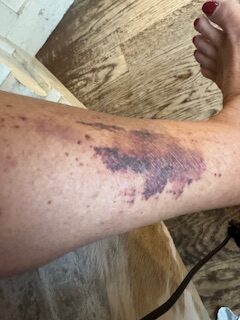
You know those mysterious purple marks that show up out of nowhere on your arms or hands? At first, I thought I had brushed against something. But they kept appearing, sometimes even growing in size before slowly fading over weeks. Welcome to the world of solar purpura – formerly known (and poorly named, in my opinion) as senile purpura.
Let’s clear something up right away: I’m not a senior. And yet, here I am, spotting these bruises more often than I’d like. If you’ve noticed the same thing and you’re not eligible for AARP, you are not alone. It turns out, solar purpura is more about sun exposure and skin thinning than it is about age. And the good news? There are ways to reduce its appearance and take better care of your skin.
What Is Solar Purpura?
Solar purpura occurs when small blood vessels under your skin break from even minor bumps or pressure. It happens more frequently as skin thins over time, especially after years of sun exposure. It’s harmless but frustrating – especially when it feels like your skin is betraying you.
It’s Not Just You.
These purple blotches are surprisingly common, even in people in their 40s and 50s (and sometimes younger!). Thinning skin, weakened capillaries, and decreased collagen all contribute. But there’s hope!
My Updated Skincare Routine
I’ve revamped how I care for my skin since learning more about solar purpura, and here’s what I recommend:
MORNING:
- Gentle Cleanser: Look for one that doesn’t strip your skin, like CeraVe Hydrating Cleanser.
- Hydrating Moisturizer: I love Aveeno Calm + Restore or Cetaphil Moisturizing Cream.
- Sunscreen, always: Mineral-based SPF 30+ (like EltaMD UV Clear or Blue Lizard Sensitive Mineral Sunscreen) protects fragile skin without irritation.
EVENING:
- Cleanse again gently and apply a retinol (if tolerated) to stimulate collagen and skin renewal. Start slow! Try a pea-sized amount of Skinceuticals Retinol 0.3% or a more gentle drugstore version.
- Follow up with a rich moisturizer or a barrier cream like Epionce Extreme Barrier Cream.
Supplements and Foods That Help
- Vitamin C: promotes collagen production
- Vitamin K: supports healthy blood vessels
- Collagen peptides: support elasticity and skin strength
- Zinc and bioflavonoids: reduce capillary fragility
Adding a daily collagen supplement (like Vital Proteins) and more leafy greens or citrus fruits to your diet can make a difference over time.
Cover It Up (If You Want To)
While I’m all for embracing real skin, I also like options. A dab of yellow-toned concealer over a bruise helps cancel out the purple. Finish with a lightweight foundation or BB cream if you prefer.
Soothing Creams That Actually Work
- Skintensive Bruise Cream: With arnica, vitamin C, and E
- DerMend Moisturizing Bruise Formula: Widely recommended for solar purpura
- Arnica Gel or Cream: Like Boiron – for reducing inflammation and healing
Lifestyle Tweaks
- Wear lightweight long sleeves to protect vulnerable arms
- Avoid bumping into hard surfaces (easier said than done, I know)
- Always apply SPF before heading outdoors
- Stay hydrated to keep skin supple from the inside out
When to See a Dermatologist
If you’re dealing with frequent or worsening bruising, or want faster solutions, dermatologists can offer:
- Broadband light treatments
- Pulsed dye laser therapy
- Nd:YAG laser to reduce discoloration quickly
These are cosmetic procedures, but if the bruising is affecting your confidence, it’s worth discussing.
Final Thoughts
Having solar purpura doesn’t mean you’re old. It means your skin needs a little more TLC. Don’t let a few purple patches make you feel less vibrant. You’re not alone, and with a few changes, you can feel confident in your skin again.
Let me know if you’ve tried any of these remedies or if something has worked wonders for you. We’re in this together!
